
Cook County · City of Chicago
Sell Your House in Chicago, Illinois
Chicago housing is old, varied and expensive to renovate. If your property needs work you do not want to manage, or the timing of a sale matters more than the last dollar of price, a direct sale is worth understanding before you list.
- No obligation
- Sell as-is
- No showings
- You choose the timeline
The city's housing stock
Selling a house in Chicago
More than half of Chicago's residential buildings went up before 1950. That age is the single biggest reason homeowners here look at a direct sale.
Older buildings bring specific costs. Masonry needs tuckpointing. Rear porches have a replacement cycle. Electrical service that was adequate in 1955 is not adequate for a modern buyer's inspection, and a flat roof reaching the end of its life is a five-figure line item before anyone talks about a kitchen.
Cook County property taxes add another layer, particularly for owners holding an empty house while they decide what to do. Reassessment can change a bill significantly from one cycle to the next, which matters when a property has been sitting.
None of that means a listing is the wrong choice. A well-kept home in a strong neighborhood usually does better on the open market. A property with real condition issues faces a much smaller buyer pool, because lenders will not finance a house that cannot pass an appraisal.
Property types
Chicago properties we review
Each of these sells differently, and the differences matter more than the address.
Chicago bungalows
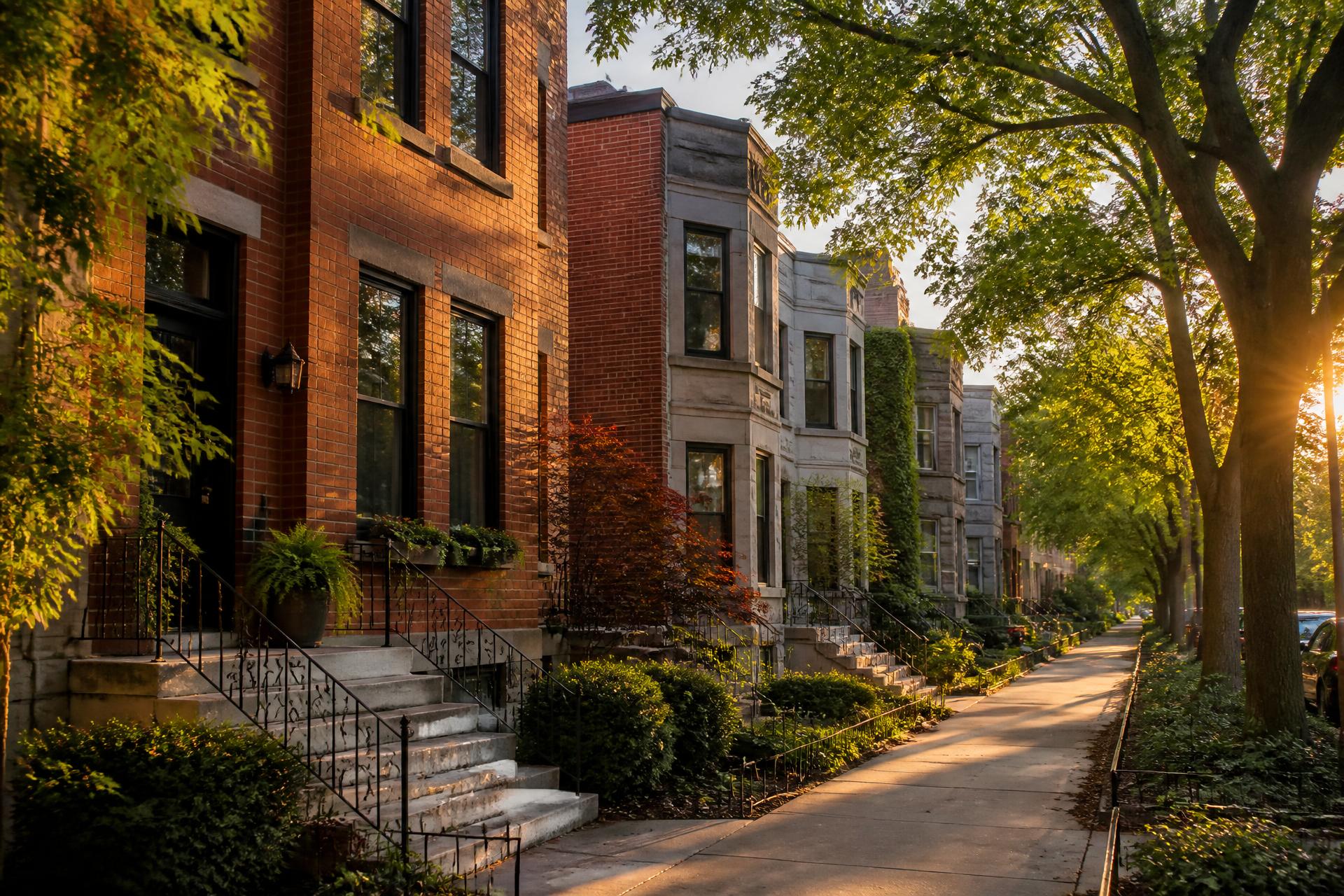
The brick bungalow belt runs through much of the northwest and southwest sides. These homes are structurally sound and frequently carry original kitchens, knob-and-tube remnants and unfinished attic space.
Two-flats and three-flats
A defining part of the city's housing. Many have been in one family for decades, with one unit rented and deferred maintenance accumulating in the others.
Greystones and workers cottages
Pre-1920 construction with masonry that eventually needs tuckpointing and rear porches that need replacement on a fixed cycle.
Condominiums
Association health matters as much as the unit. Reserves, special assessments and rental caps all affect what a sale looks like.
Single-family homes on the outer edges
Postwar ranches and Georgians in bungalow-adjacent neighborhoods, often first- or second-owner properties.
Inherited and long-vacant property
Homes that have sat empty through a Chicago winter carry risks that occupied houses do not, particularly around plumbing and roofs.
Across the city
Major areas of Chicago
Demand, housing age and repair costs vary widely between these areas, so comparable sales are pulled from the immediate blocks around a property rather than the city as a whole.
North Side
Denser housing with strong resale demand, including vintage condos, two-flats and frame homes near the lake and the brown and red lines.
Northwest Side
Bungalow neighborhoods such as Portage Park, Jefferson Park and Belmont Cragin, where original-condition homes are common.
West Side
Greystones, workers cottages and multi-family buildings, with block-by-block differences in demand that citywide averages hide.
Southwest Side
Brick bungalows and ranches in neighborhoods like Garfield Ridge and Clearing, many held by the same family for generations.
South Side
A wide range of housing, from large historic homes to two-flats and vacant properties where repair scope drives the entire analysis.
Far South Side
Bungalows and single-family homes near the city limits, where taxes and insurance costs weigh heavily on holding an empty property.
The process
How Direct Offer Homes works
- 1
Tell us about your property
Enter the property address and a few basic details about its condition and your timeline. It takes about a minute.
- 2
Review your cash offer
We look at the property information, comparable local sales and the work involved, then walk through the cash offer options with you.
- 3
Choose what works for you
If the offer makes sense, you pick a closing timeline that fits your situation. If it does not, you owe us nothing.
Condition
Selling a Chicago property as-is
Water in the basement, an original kitchen, a porch that needs rebuilding, a unit stripped during a turnover: these are the conditions we see most often, and none of them need to be corrected first.
How offers are evaluated here
We start with recent comparable sales on nearby blocks, then subtract the work the property genuinely needs, the carrying costs during that work including taxes and insurance, and the margin required to take on the project. What is left is the offer, and we show you how we got there.
If the analysis suggests you would do better listing the property, we will say so. That happens, and telling you is more useful to us than a strained deal.
Comparing options
Direct sale vs traditional listing
| Category | Direct sale | Traditional listing |
|---|---|---|
| Repairs | Sold in current condition | Repairs and cosmetic updates often expected |
| Showings | None required | Open houses and buyer walkthroughs |
| Preparation | No staging, cleaning or photography | Staging, photos, listing prep |
| Timeline | You choose a closing window that fits | Depends on buyer demand and lender timing |
| Buyer financing | No mortgage approval involved | Sale can fall through if financing fails |
| Process | One point of contact, few moving parts | Agent, lender, appraiser, inspector |
| Convenience | Built around your schedule | Built around the market's schedule |
Being straight about the trade-off: a property listed on the open market may sell for a higher price, particularly when it shows well and the owner can wait for the right buyer. A direct sale tends to appeal to homeowners who care more about condition, certainty and timing than about reaching the highest possible number.
FAQ
Chicago seller questions
We look at properties across the city, from the far north side to the south and west sides. Which neighborhood a property sits in affects the analysis, not whether we will review it.
Nearby
Suburban communities we serve
Rentals
Selling a House With Tenants in Illinois
What happens to a lease when a rental property sells in Illinois, tenant rights during a sale, and how landlords can plan a smooth transition.
Property condition
Selling a Vacant House in Chicago
The costs and risks of holding a vacant house in Chicago, city registration requirements to be aware of, and how to prepare a vacant property for sale.
Process and costs
How Cash Home Buyers Determine Offers
A plain explanation of how direct buyers calculate an offer, which factors move the number, and the questions every seller should ask.
No obligation
Get an offer for your Chicago property
Start with the address. We will confirm a few details and explain what happens next, with no pressure at any stage.